Case Study - 2022
Discovery for a Fintech Startup — One workshop. Twelve weeks of synthesis.
TYPE
Consulting, Financial Services
ROLE
Design Researcher, Workshop Facilitator
SCOPE
Discovery and Research
DURATION
4 months
OVERVIEWA startup going up against a monopoly.
Mid-market investment firms were stuck between tools that cost too much and tools that weren't built for them. Bloomberg had the data but priced out smaller firms. The alternatives were fragmented, unreliable, or designed for a completely different kind of user. A fintech startup came to us with a clear thesis: there was a real market here, and the way to win it was to build something better.
My job was to help them figure out what that actually meant. That started with flying to Dallas and spending four days in a room with their founding team.
THE CHALLENGEStrong conviction. No product definition yet.
The founding team knew the financial data space well. What they hadn't done was translate that expertise into a defined user, a validated problem frame, or a clear sense of what to build first. Discovery was the work.
The constraint was real: external end users weren't available. The founders and their team were the research participants — people with deep domain knowledge and a personal stake in the outcome. Getting honest signal out of that dynamic, rather than just validating what they already believed, was the actual design challenge before any screen got drawn.
APPROACHFour days of structured conversation.
The workshop was designed to move from problem framing to product definition across the week. Each session built on the one before it.
One session early in the week stood out. A Dreams and Gripes exercise surfaced something that shaped the rest of the work: the frustration in this market wasn't just about price or a dated interface. It was about trust. Users didn't believe the data they were working with, and the tools they had made that worse. That reframe changed how we thought about what the product needed to do.
The room had five people with strong opinions and deep expertise in a domain I was new to. Facilitating that meant staying genuinely curious, making sure the conversation kept moving without losing people along the way, and knowing when to let things open up and when to pull them back in.
THE RESEARCH
Turning four days into something a product team could use.
Over twelve weeks, working with a designer in Argentina on first drafts, I finalized five research deliverables. With no external user access, everything was built from stakeholder synthesis and competitive analysis across the existing landscape — Bloomberg, Cap IQ, Reuters Eikon, S&P, PitchBook. The artifacts were honest about their assumptions and designed to be validated once real users came into the process.
-
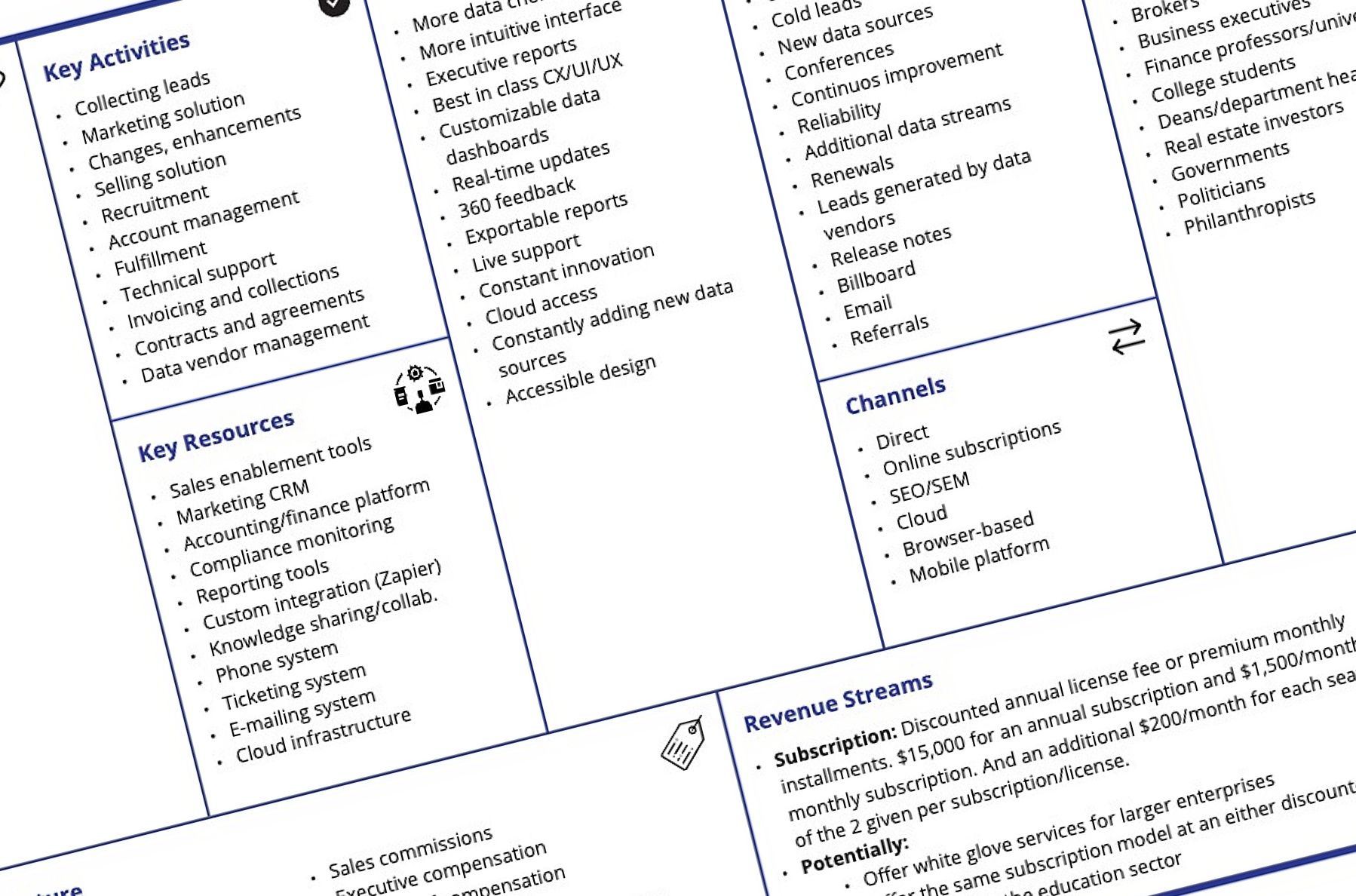
A structured capture of how the business creates, delivers, and captures value. Built across a full workshop session on day four, this artifact mapped key partners, activities, resources, customer segments, channels, and revenue streams. It gave the founding team a shared view of how the product fit together as a business, not just as a feature set.
-
A visual mapping of everyone with influence over or interest in the product, organized by proximity to the core team and level of involvement. This artifact established clear accountability across the engagement and surfaced who needed to be kept informed versus who needed to be in the room making decisions.
-
A synthesis of what the primary user says, thinks, does, and feels when navigating their current workflow. Built from stakeholder interviews and competitive research, this artifact captured the emotional and behavioral reality of the user before a single feature was defined.
-
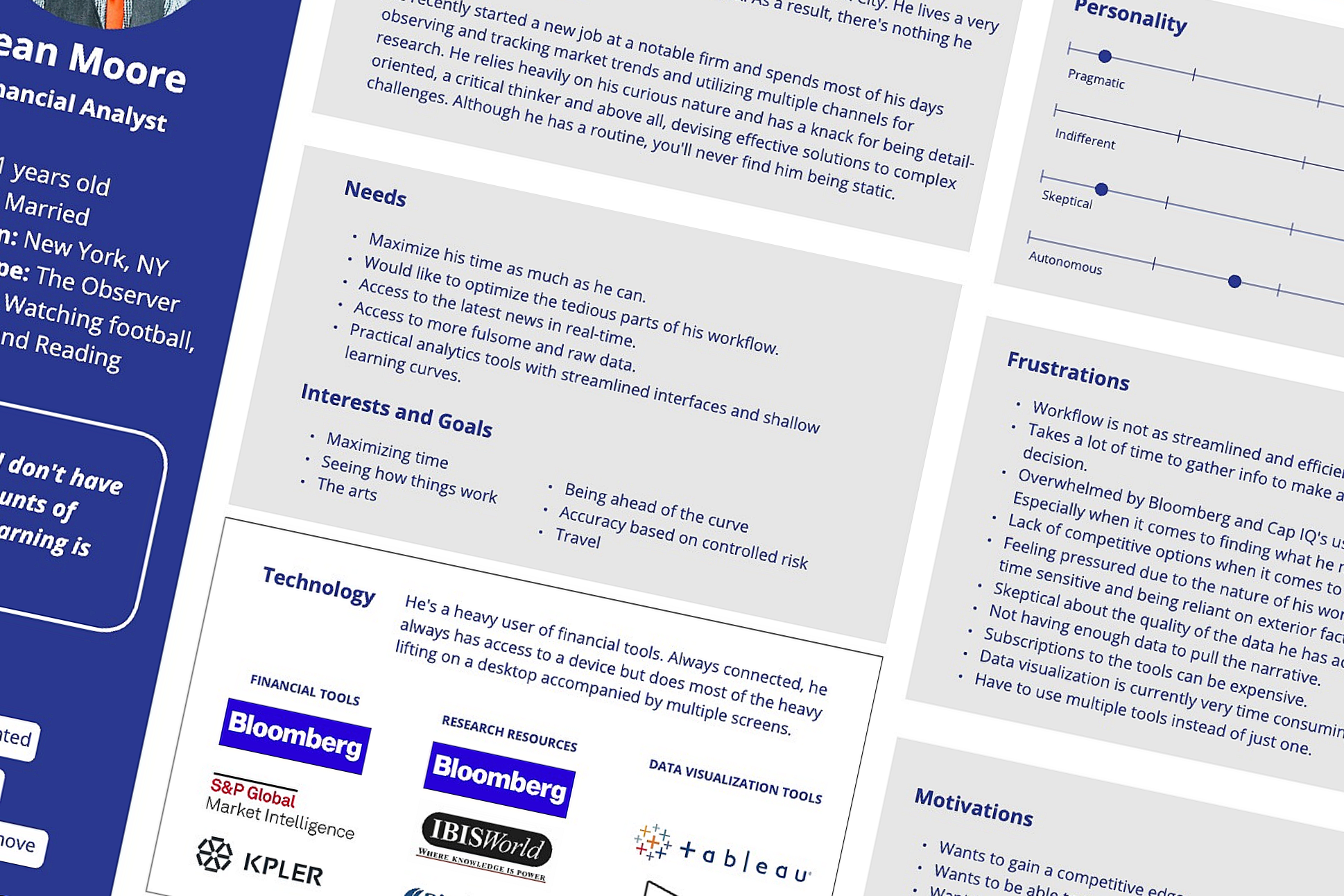
A detailed archetype of the primary user: a quantitative analyst at a mid-market investment firm, time-pressured, data-skeptical, and underserved by the tools available to them. The persona grounded every subsequent product decision in a specific person with specific needs rather than a generalized user type.
-
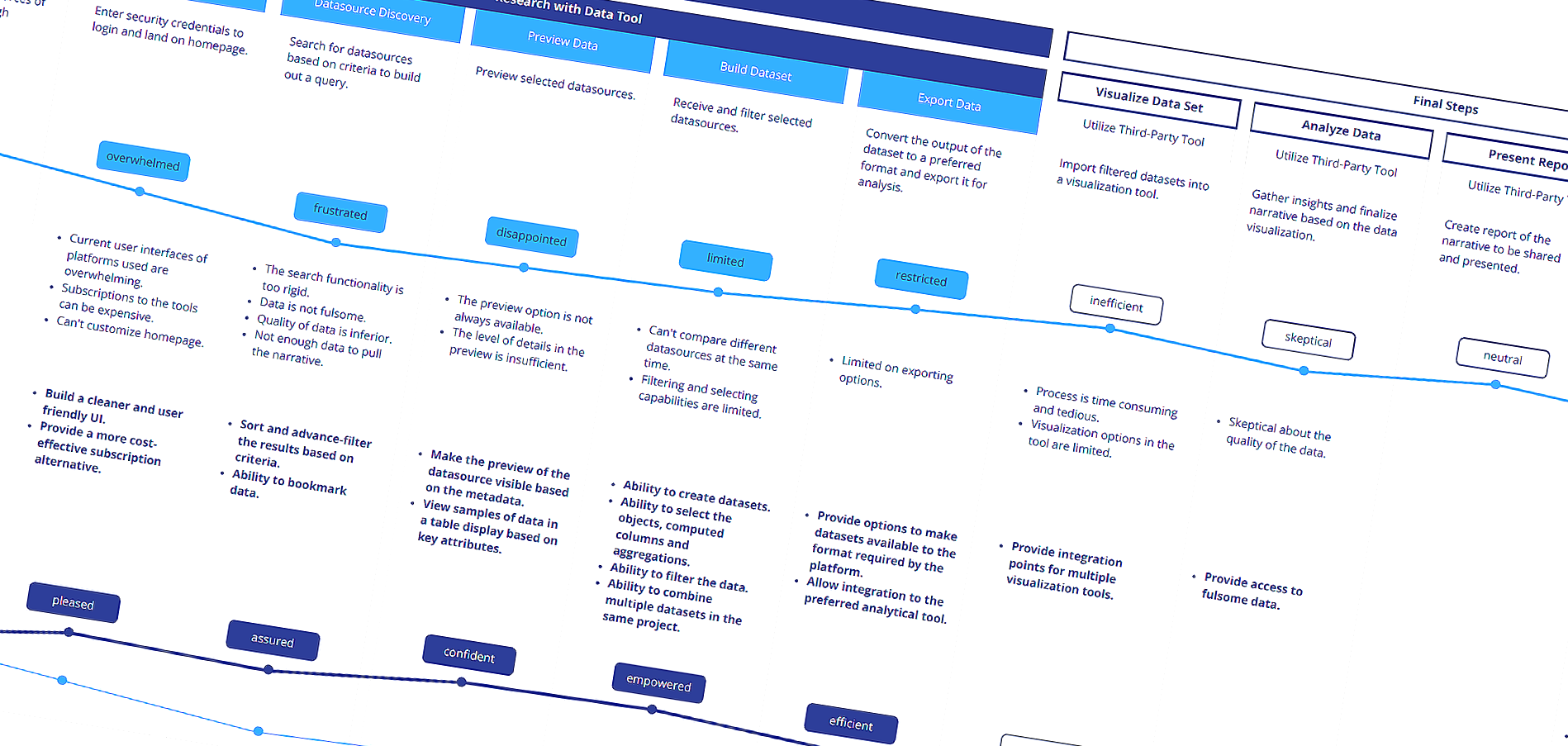
A mapped view of the user's end-to-end experience with their current workflow — from gathering information and searching for data sources through building datasets, exporting reports, and making decisions. The map tracked emotional state at each stage, identified the sharpest pain points, and proposed where the product could intervene most meaningfully.
WHAT I LEARNED
Some contexts you grow into. Some you just have to show up for.
I hadn't worked in financial services before this engagement. That turned out not to be the barrier I expected. What the work required wasn't domain fluency — it was the ability to earn the trust of people who had it, help them think more clearly than they could on their own, and hold the process steady while the content stayed unfamiliar.
My time in consulting put me in a lot of rooms like that. Different industries, different stakeholders, different problems. What I found each time was that the process transfers even when the domain doesn't. You learn to read a room quickly, to know what questions open things up and which ones close them down, and that showing up prepared and staying curious is usually enough.